Your search:
No selection
Filter results:
|
Other products from Various Artists |
| Details / Tracklist: |
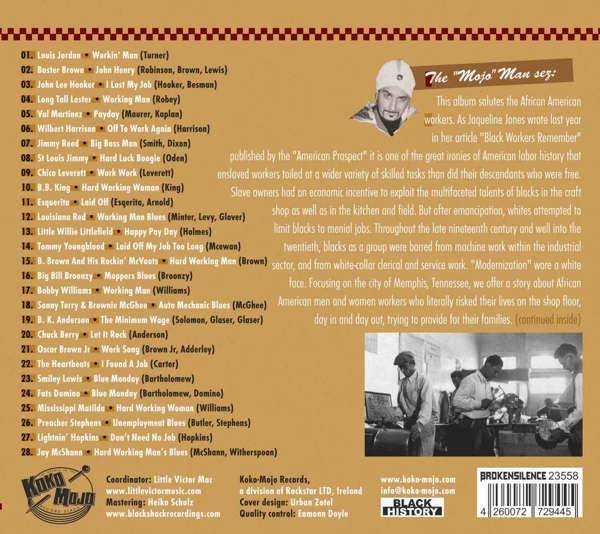
 01. Louis Jordon "Workin' Man" 02. Brown, Buster "John Henry" 03. Hooker, John Lee "I Lost My Job" 04. Long Tall Lester "Working Man" 05. Val Martinez "Payday" 06. Harrison, Wilbert "Off To Work Again" 07. Reed, Jimmy "Big Boss Man" 08. St. Louis Jimmy "Hard Luck Boogie" 09. Leverett, Chico "Work Work" 10. King, B. B. "Hard Working Woman" 11. Esquerita "Laid Off" 12. Louisiana Red "Working Man Blues" 13. Littlefield, Little Willie "Happy Pay Day" 14. Tommy Youngblood "Laid Off My Job Too Long" 15. B. Brown And His Rockin' McVouts "Hard Working Man" 16. Broonzy, Big Bill "Moppers Blues" 17. Williams, Bobby "Working Man" 18. Sonny Terry & Brownie McGhee "Auto Mechanic Blues" 19. B. K. Anderson "The Minimum Wage" 20. Berry, Chuck "Let It Rock" 21. Oscar Brown Jr. "Work Song" 22. Heartbeats, The "I Found A Job" 23. Lewis, Smiley "Blue Monday" 24. Domino, Fats "Blue Monday" 25. Mississippi Matilda "Hard Working Woman" 26. Preacher Stephens "Unemployment Blues" 27. Hopkins, Lightnin' "Don't Need No Job" 28. McShann, Jay "Hard Working Man's Blues" 01. Louis Jordon "Workin' Man" 02. Brown, Buster "John Henry" 03. Hooker, John Lee "I Lost My Job" 04. Long Tall Lester "Working Man" 05. Val Martinez "Payday" 06. Harrison, Wilbert "Off To Work Again" 07. Reed, Jimmy "Big Boss Man" 08. St. Louis Jimmy "Hard Luck Boogie" 09. Leverett, Chico "Work Work" 10. King, B. B. "Hard Working Woman" 11. Esquerita "Laid Off" 12. Louisiana Red "Working Man Blues" 13. Littlefield, Little Willie "Happy Pay Day" 14. Tommy Youngblood "Laid Off My Job Too Long" 15. B. Brown And His Rockin' McVouts "Hard Working Man" 16. Broonzy, Big Bill "Moppers Blues" 17. Williams, Bobby "Working Man" 18. Sonny Terry & Brownie McGhee "Auto Mechanic Blues" 19. B. K. Anderson "The Minimum Wage" 20. Berry, Chuck "Let It Rock" 21. Oscar Brown Jr. "Work Song" 22. Heartbeats, The "I Found A Job" 23. Lewis, Smiley "Blue Monday" 24. Domino, Fats "Blue Monday" 25. Mississippi Matilda "Hard Working Woman" 26. Preacher Stephens "Unemployment Blues" 27. Hopkins, Lightnin' "Don't Need No Job" 28. McShann, Jay "Hard Working Man's Blues"
|
 | | Number of discs: |
1 |
| | Description: | Off To Work is a compilation of blues tracks released as CD on 19 Nov 2021. - Slave owners had an economic incentive to exploit the multifaceted talents of blacks in the craft shop as well as in the kitchen and field. But after emancipation, whites attempted to limit blacks to menial jobs. Throughout the late nineteenth century and well into the twentieth, blacks as a group were barred from machine work within the industrial sector, and from white-collar clerical and service work. "Modernization" wore a white face. Focusing on the city of Memphis, Tennessee, we offer a story about African American men and women workers who literally risked their lives on the shop floor, day in and day out, trying to provide for their families. In the 1940s and 1950s, Memphis was a place where blacks were concentrated in the lowest-paying, dirtiest, and most hazardous jobs, and where the political establishment (the noxious, violent Boss Crump machine) routinely colluded with employers to harass and assault union organizers. Within this state-sanctioned system of segregation, industrial unionism represented the most progressive force for change, their toughest battles in the period immediately following World War II. Many had moved to Memphis from the surrounding countryside, where their parents had labored as sharecroppers, receiving their pay more often in promises than in cash. Factory work represented a step up and out of the plantations, sawmills, and lumber camps, and the steady wages offered by the biggest plants, especially Firestone, were higher than the pay earned by African American post office employees, nurses, or schoolteachers. | | | No. of tracks: |
25 |
| | Manufacturer No.: |
23558 |
| Product Safety
Responsible Person for the EU:
Rhythm Bomb Records
c/o BROKEN SILENCE
Stadtdeich 27, 20097 Hamburg, DE
info@rhythmbomb.com | |
|
Customers who bought this product also purchased
There are currently no product reviews.
|  |
|
|
|
|








![Various Artists - Eurovision Song Contest Liverpool 2023 [DE-Version, Regio 2/B]](https://img.grooves.land/images/cover/692/533/j8dtg5mz.j11)