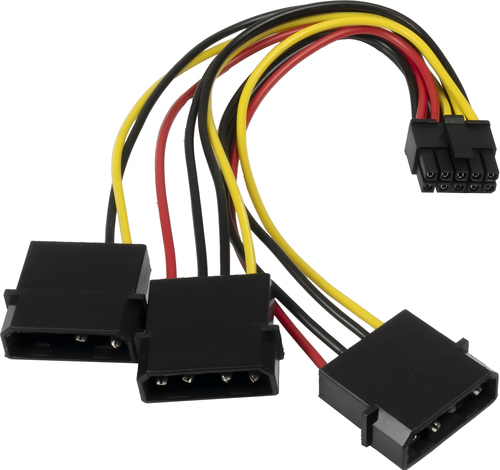
Inter-Tech 88887405 drive bay panel Backplane Green Inter Tech
58,29 EUR
plus shipping and customs
Hardware/ Electronic Inter-tech Elektronik Handels
Shipping charges are minimized.
110 visitors are looking at this item
Delivery to US in:
6-10 workdays (resupply of stocks)
Sales Rank:
#6 in External Optical Drives #1603 in Computer
Style:
External Optical Drives
Product No.:
2101345828
Description:
Weee-Nr.: 54978142
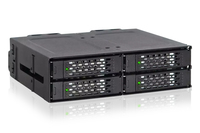
The SU-2 from Inter-tech Elektronik Handels is a 4-bay backplane designed for flexible integration of NVMe, SAS, and SATA drives in compact server and workstation environments. Thanks to its multi-protocol support, it allows system integrators and demanding users to combine high-performance NVMe SSDs with classic SAS/SATA HDDs or SSDs in a single, tidy enclosure. The backplane is suitable for 2.5" storage devices (form factor inferred from typical product class; if a specific size is required, please refer to the official datasheet) and is intended for installation in a corresponding chassis with front-accessible bays.
Technically, the SU-2 offers four separate drive slots that are connected to the system via matching host interfaces (depending on the cabling and controller used). By supporting NVMe drives, it enables significantly higher data throughput and lower latency compared to pure SATA/SAS solutions, which is especially beneficial for databases, virtualization, high-speed caching and other I/O-intensive workloads. SAS and SATA compatibility ensures broad support for common enterprise and desktop drives, making the SU-2 suitable both for professional and advanced private use. The backplane is typically operated with appropriate RAID or HBA controllers to implement redundancy, performance tuning, or tiered storage concepts.
In terms of applications, the SU-2 is ideal for small servers, compact storage systems, industrial PCs and workstations where four drives need to be combined in a space-saving and service-friendly manner. Typical usage scenarios include file servers, backup systems, media servers, development and test environments, as well as edge and IoT servers that require robust and flexible storage. The hot-swap capability commonly associated with such backplanes (please confirm specifically in the official documentation) allows drives to be replaced or expanded with minimal downtime, which is a major advantage in productive environments.
The key advantages of this backplane include the consolidation of different drive technologies in one module, clean and structured cable management inside the chassis, and easier maintenance thanks to clearly separated drive bays. Users benefit from the ability to build hybrid storage solutions - for example, combining ultra-fast NVMe SSDs for operating systems and critical applications with cost-effective SATA HDDs for large data volumes. This not only optimizes performance, but also improves the cost-benefit ratio of the overall system.
Inter-tech Elektronik Handels is known as a supplier of PC cases, server chassis, power supplies and accessories aimed at both professional and demanding private users. The company focuses on practical, well thought-out solutions that enable system builders and companies to implement reliable, modular and upgradable systems. In many of its product lines, Inter-tech emphasizes efficiency, durability and flexible usability - important aspects when it comes to conserving resources through longer product lifecycles and avoiding unnecessary hardware replacement.
Where Inter-tech uses energy-efficient designs, modular concepts and durable materials in its portfolio, this can contribute to reduced energy consumption and less electronic waste over the long term. By choosing a robust, flexible backplane such as the SU-2, customers implicitly support a system design that can be adapted and expanded instead of being entirely replaced. This modularity helps extend the service life of existing systems, reducing the environmental footprint associated with frequent hardware upgrades. Thus, the purchase of such infrastructure components can be seen as a contribution towards more sustainable IT, in which performance, flexibility and a more considerate use of resources are combined.